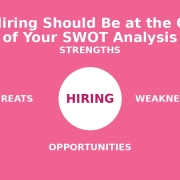
Why Hiring Should Be at the Center of Your SWOT Analysis

When companies conduct a SWOT analysis (Strengths, Weaknesses, Opportunities, Threats), they often focus on products, competition, or market trends. But one critical area is frequently overlooked  and it sits at the very heart of your business: your people.

At Omunix International, we help businesses rethink their talent strategy. The reality is simple: your hiring process and your team should be central to any strategic discussion. Here’s why.

Strengths: Your Talent Is Your Competitive Advantage

One of the most powerful and often underestimated  strengths in any organization is its people. A team of skilled, experienced, and motivated professionals drives innovation, resilience, and sustainable growth.

A strong hiring strategy is also a strategic asset. If you consistently attract top talent through smart sourcing, strong employer branding, and efficient recruitment processes, that’s a real competitive edge  not just an operational function.

Weaknesses: What’s Holding You Back?

Weaknesses are internal factors that place your company at a disadvantage. In HR and recruitment, common weaknesses include:

  • A weak employer brand that discourages top candidates

  • Outdated or slow recruitment processes

  • High employee turnover

  • Lack of diversity or critical skills in your talent pipeline

Even apparent strengths  such as advanced facilities or rapid expansion  can become weaknesses if they create financial strain or limit investment in people.

Identifying these gaps is the first step toward building a stronger hiring foundation.

Opportunities: Leveraging External Change

SWOT analysis helps uncover external opportunities that your organization can leverage. From a hiring perspective, these may include:

  • Expanding into new geographic markets through remote or hybrid talent

  • Technological advancements (AI tools, automation, recruitment databases) that improve efficiency

  • Changes in jobseeker behavior that allow for more targeted outreach

  • Economic or regulatory shifts that create favorable hiring conditions

For example, organizations with strong technological capabilities can implement smart recruitment systems or candidate nurturing strategies to stay ahead of competitors.

The key is aligning your internal strengths with external opportunities to create sustainable competitive advantage.

Threats: Risks to Your Talent Strategy

Threats are external factors that could undermine your business or hiring strategy. These may include:

  • A shrinking or highly competitive talent pool

  • Competitors offering better compensation or flexibility

  • Regulatory or political changes affecting employment laws

  • Economic downturns impacting hiring budgets

Even strong HR practices can quickly become outdated if market conditions shift. For instance, relying heavily on recruiting from top universities may become risky if competition intensifies or fewer graduates enter the field.

Identifying threats early allows your organization to adapt before falling behind.

SWOT Isn’t Just Insight  It’s Action

A SWOT analysis is not just a diagnostic tool  it’s a decision-making framework.

Once you identify your HR-related strengths, weaknesses, opportunities, and threats, ask:

  • Can we achieve our business goals with our current team and hiring practices?

  • Are we leveraging our strengths to capitalize on real opportunities?

  • Do our weaknesses or external risks require strategic changes?

Not every opportunity is worth pursuing, and not every strength is relevant in every situation. That’s why we work closely with our clients to prioritize the actions that generate the greatest strategic return  by aligning talent with long-term business objectives.

People Power Your Strategy

At the end of the day, people power your business. Your hiring strategy should reflect that reality.

If you’re ready to evaluate your current recruitment approach  or build a more strategic, future-focused hiring plan  Omunix International is here to help.
Questions You Should Never Ask in a Job Interview and What to Ask Instead

Job interviews aren’t just about finding the right candidate  they’re also your opportunity to showcase your company culture, values, and professionalism.

Even with the best intentions, some interview questions can cross legal and ethical boundaries. Whether due to outdated habits, unconscious bias, or simple curiosity, certain questions can make candidates uncomfortable, expose your company to legal risk, and damage your employer brand.

In today’s competitive hiring market, a respectful and structured interview process is essential.

So what should you avoid  and what should you ask instead?


1. “Do you have kids?”

Why it’s problematic

This question can imply assumptions about availability, commitment, or gender roles. It may also constitute family status discrimination in many countries. A candidate’s parental status is not relevant to their ability to perform the job.

Ask this instead

“This position may require occasional travel or late hours. Are you comfortable with that?”

Focus on job requirements  not personal life.

2. “Where are you from originally?”

Why it’s problematic

While it may seem like small talk, this question can imply bias related to ethnicity or immigration status and may fall under national origin discrimination laws.

Ask this instead

“Are you legally authorized to work in this country?”

Keep the conversation centered on legal eligibility, not background.

3. “How old are you?” or “What year did you graduate?”

Why it’s problematic

Age should never influence hiring decisions. In many countries, asking about age can violate age discrimination laws  particularly for candidates over 40.

Ask this instead

“This role involves learning and using new software regularly. Can you describe your experience adapting to new technologies?”

Evaluate skills and adaptability  not age.

4. “Do you have any disabilities or health conditions?”

Why it’s problematic

Questions about disabilities or medical conditions may violate disability discrimination laws (such as the ADA in the U.S. and equivalent legislation across the EU and other regions).

Employers cannot ask about medical conditions unless it is directly related to essential job functions and legally compliant.

Ask this instead

“This role requires standing for extended periods. Are you able to meet this requirement with or without reasonable accommodation?”

Focus on job functions, not diagnoses.

5. “Are you married?” or “Are you planning to have children?”

Why it’s problematic

These questions imply that private life could affect performance. They can lead to claims of marital or gender discrimination and are not relevant to professional capability.

Ask this instead

“This role requires availability from Monday to Friday, 9 a.m. to 6 p.m. Are you able to commit to this schedule?”

State the requirement clearly and allow the candidate to confirm availability.

6. “What religion do you practice?”

Why it’s problematic

Religion is unrelated to job performance. Asking about it may lead to claims of religious discrimination.

Ask this instead

“Are you available to work the schedule outlined, including weekends or public holidays if required?”

Again, focus on scheduling needs  not belief systems.

7. “Have you ever been arrested?”

Why it’s problematic

In many jurisdictions, asking about arrests that did not result in convictions is prohibited. This question can also disproportionately affect marginalized communities.

Ask this instead

“If offered the role, would you be willing to undergo a background check, where legally permitted?”

Ensure compliance with local regulations and apply background checks consistently.

8. “What’s your sexual orientation?” or “Do you live with your partner?”

Why it’s problematic

These questions are a clear invasion of privacy and are completely irrelevant to job qualifications. In many regions, they are illegal.

What to ask instead

Nothing.
This topic has no place in a professional interview.

9. “What’s your current salary?”

Why it’s problematic

In many U.S. states and several European countries, asking about salary history is restricted or prohibited because it perpetuates wage inequality.

Ask this instead

“What are your salary expectations for this role?”

This keeps negotiations transparent and fair.

Why This Matters

A poorly structured interview doesn’t just risk legal consequences  it can damage your reputation as an employer.

Top candidates evaluate companies just as carefully as companies evaluate candidates. An intrusive or inappropriate question can:

  • Create distrust

  • Signal bias

  • Harm diversity efforts

  • Push strong candidates to walk away

On the other hand, a fair and professional interview process:

  • Strengthens your employer brand

  • Reduces legal exposure

  • Promotes diversity and inclusion

  • Improves hiring quality


The Golden Rule

If a question is not directly related to job performance, essential requirements, or legal eligibility  don’t ask it.

Strong interviews focus on:

  • Skills

  • Experience

  • Competencies

  • Cultural contribution

  • Role alignment

Respectful hiring practices aren’t just about compliance  they’re about building trust and attracting the right talent.

Strategic Planning for Successful Hiring: Aligning Vision, Mission, and Values

In today’s competitive business landscape, the success of an organization goes beyond the skills of its workforce. It depends on how well that workforce aligns with the organization’s mission, vision, and values. As a hiring agency, we understand that strategic planning is essential to ensure the right talent is recruited—not just for today, but for the future. A well-aligned hiring strategy can make all the difference in achieving long-term organizational goals.

At Omunix International, our approach to recruitment goes beyond simply filling open positions. We help organizations think strategically about hiring, ensuring that every candidate aligns with their core values and contributes meaningfully to their vision.

Why Strategic Hiring Matters

Strategic management in recruitment means aligning your organization’s resources including human capital with your overarching goals. For hiring agencies like ours, it’s not just about finding someone who fits the job description; it’s about finding the right person who fits the company’s culture and can grow with the organization.

This approach not only benefits the company but also ensures the individual builds a fulfilling, long-term career.

Mission Statement: Defining What Your Organization Needs

A mission statement is the foundation of any organization’s strategy. It provides clarity about purpose and direction, helping define the type of talent needed. A well-crafted mission statement serves as a guide for hiring decisions, ensuring new employees are aligned with long-term objectives.

Example Mission Statement for Hiring:
“We connect skilled talent with companies committed to innovation, growth, and meaningful impact.”

At Omunix International, we collaborate with organizations to fully understand their mission, ensuring that the candidates we present fit not just the role but the bigger picture.

Vision Statement: Imagining the Future Workforce

Your vision statement outlines where your organization wants to be in the future. In hiring, this means understanding the type of workforce required to achieve long-term aspirations whether in-office, hybrid, or remote.

A clear vision allows us to tailor recruitment strategies that anticipate future skills and leadership needs. This proactive approach ensures we identify candidates who can evolve with your organization and contribute to achieving that vision.

Example Vision Statement for Hiring:
“To cultivate a dynamic workforce that drives innovation, fosters collaboration, and excels in meeting the challenges of a rapidly changing world.”

With this vision in mind, we focus on candidates who are not only technically qualified but also aligned with your long-term strategic direction.

Values: Building a Cohesive and Purpose-Driven Team

Values are the guiding principles that shape how an organization operates. Aligning candidates with your company’s values helps maintain a strong, cohesive culture—especially in today’s diverse and flexible work environments.

At Omunix International, we recognize that culture is built on shared values. We ensure the candidates we present reflect those principles, helping create a motivated team invested in the organization’s success.

Example Values Statement for Hiring:
“We value integrity, collaboration, and excellence. Our goal is to build an inclusive and dynamic team that thrives in a culture of respect and continuous growth.”

By aligning hiring strategy with core values, organizations build teams that are not only capable—but committed.

Aligning Strategy with Hiring Needs

For long-term success, every aspect of your strategy including recruitment must align with your mission, vision, and values. At Omunix International, we focus on building workforces that support strategic growth, not just filling vacancies.

Whether you need talent for on-site roles or remote teams, we ensure each candidate recommended aligns with your broader objectives helping drive innovation, growth, and sustainable success.

Actionable Tip

If your organization has not recently defined or updated its mission, vision, or values, now is the ideal time to do so. Integrating these elements into your hiring strategy ensures every new hire moves you closer to long-term success.

At Omunix International, we help you identify candidates who are not only qualified but aligned with your organizational purpose.

Conclusion: Building the Future Workforce

Strategic hiring is about more than filling positions—it’s about building a workforce aligned with your mission, vision, and values.

At Omunix International, we partner with you to understand your strategic goals and ensure every candidate we present is a strong fit not only for the role, but for your organization’s future.

Ready to hire the right talent for the future of your organization? Contact us today to learn how we can help you build a workforce aligned with your long-term goals.